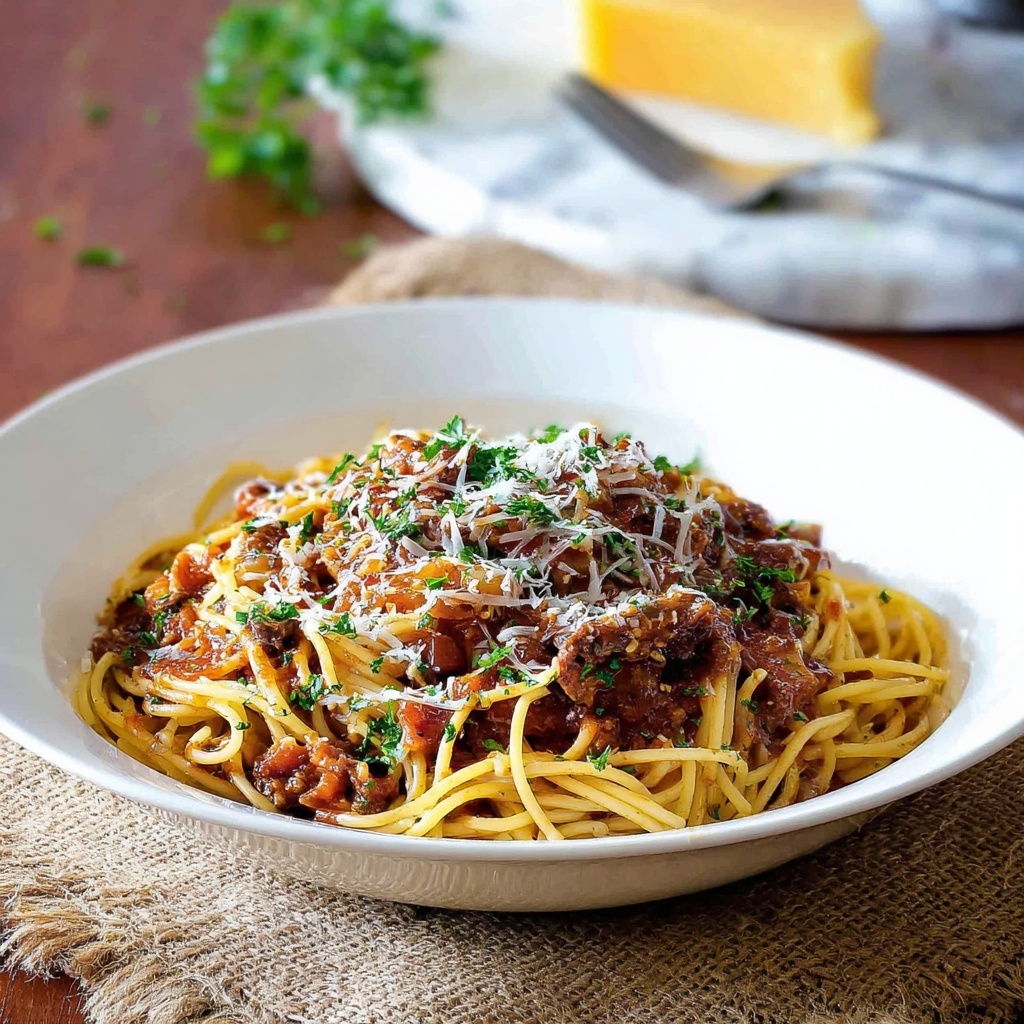
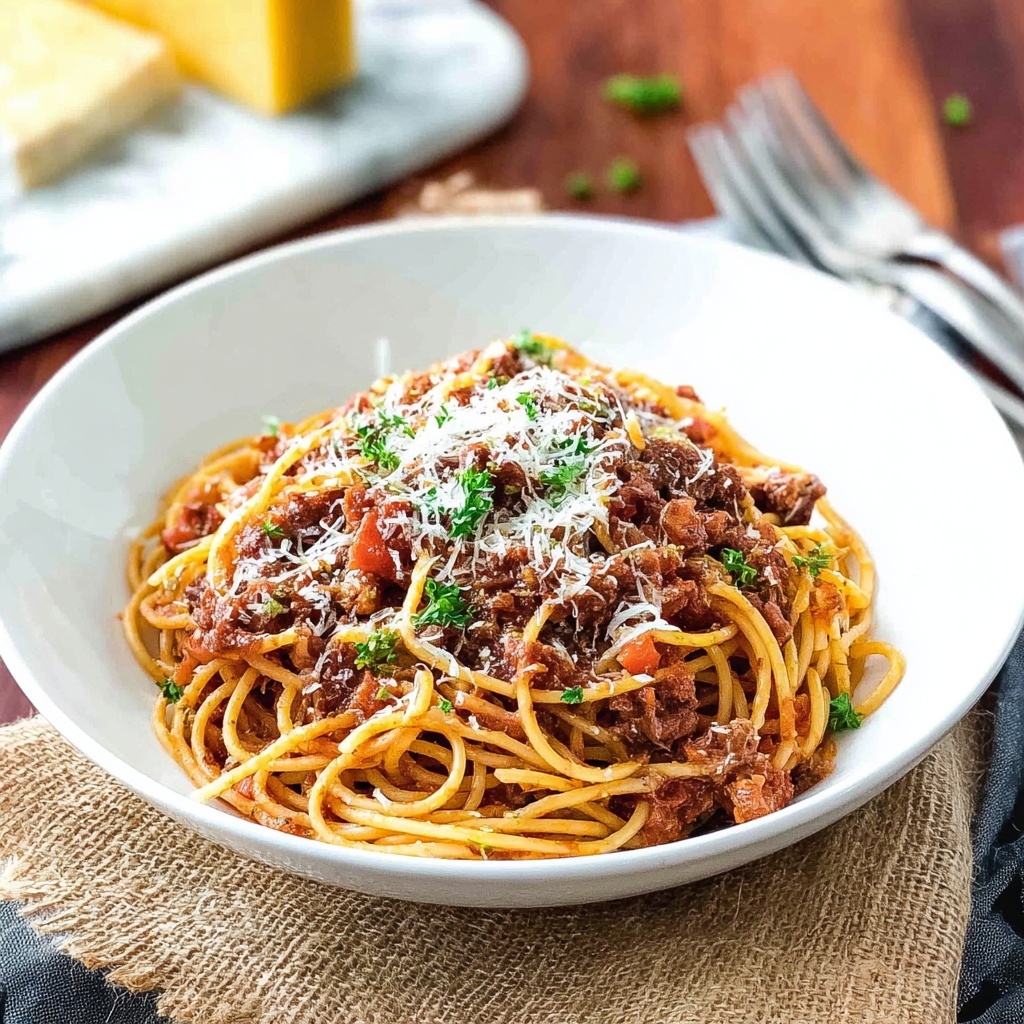
If you’re on the hunt for a truly comforting and rich dish that feels like a warm embrace, the Beef Cheek Ragu Pasta Recipe is your new best friend. This recipe brilliantly transforms tender, slow-cooked beef cheeks into a luscious ragu that clings wonderfully to perfectly cooked spaghetti. Bursting with deep, savory flavors and a hint of sweetness from tomatoes, it’s an unforgettable pasta experience that’s both simple to make and deliciously indulgent—ideal for days when you want to impress without the fuss.
Ingredients You’ll Need
The magic of this Beef Cheek Ragu Pasta Recipe lies in its straightforward, carefully chosen ingredients. Each one adds a vital layer of flavor or texture, making the final dish rich and satisfying without overwhelming complexity.
- 350 g / 12 oz dried spaghetti: The perfect vessel to hold every bit of that glorious ragu sauce.
- 2 cups leftover beef from Slow Cooked Beef Cheeks in Red Wine (shredded): Incredibly tender meat that melts in your mouth and forms the heart of the ragu.
- 1 cup Sauce of Slow Cooked Beef Cheeks in Red Wine: This adds deep, wine-infused richness that elevates the whole dish.
- 1 onion (diced): Provides sweetness and a slight crunch that balances the dense beef.
- 2 garlic cloves (minced): Adds aromatic depth and a subtle bite that wakes up the taste buds.
- 2 tbsp olive oil: Essential for sautéing and enhancing the overall mouthfeel of the sauce.
- 2 cups crushed tomato (canned): Brings vibrant color and a fresh, tangy undertone.
- 3 tbsp tomato paste: Concentrates the tomato flavor and thickens the sauce beautifully.
- 1/2 cup water: Helps loosen the sauce if it gets too thick while cooking.
- 1 to 2 tsp salt (adjust to taste): Balances all the flavors perfectly.
- Black pepper: Adds gentle heat and complexity.
- Freshly grated parmesan cheese: The finishing touch that adds a salty, nutty zing to every forkful.
- Parsley (finely chopped): Freshens the dish with a pop of color and herbaceous brightness.
How to Make Beef Cheek Ragu Pasta Recipe
Step 1: Cook the Pasta
Start by bringing a large pot of salted water to a rolling boil. Add the dried spaghetti and cook for about 6 minutes, just before reaching al dente. This slight undercooking is key since the pasta will finish cooking in the ragu sauce, soaking up all those fantastic flavors without going mushy.
Step 2: Sauté Onion and Garlic
While the pasta cooks, heat 2 tablespoons of olive oil in a large pan over medium-high heat. Toss in the diced onion and minced garlic, sautéing them for roughly 3 minutes. This step coax out their natural sweetness and infuses that warm, comforting aroma filling your kitchen—the kind that instantly lifts your spirits.
Step 3: Build the Ragu Sauce
Time to add the superstar ingredients: the shredded beef cheeks, slow-cooked sauce, crushed tomatoes, tomato paste, and half a cup of water. Stir everything together, then bring the mixture to a rapid simmer. Keep an eye on the sauce and stir occasionally to prevent sticking. Taste and adjust the seasoning with salt and freshly ground black pepper. If the sauce feels too thick, don’t hesitate to add a splash of the reserved pasta water for just the right consistency.
Step 4: Combine Pasta and Sauce
Using tongs, transfer the pasta directly from the boiling water into the ragu pan. Add another 1/2 cup of pasta cooking water to help the sauce adhere to the spaghetti. Gently toss and stir for 1 to 2 minutes until the pasta reaches perfect al dente and the sauce thickens and evenly coats every strand. This final step is where all the ingredients marry perfectly, delivering that melt-in-your-mouth texture with every bite.
Step 5: Serve and Garnish
Dish out the piping hot Beef Cheek Ragu Pasta onto plates or bowls. Sprinkle generously with freshly grated parmesan cheese and a scattering of finely chopped parsley. These finishing touches aren’t just pretty accents—they add rich umami notes and a refreshing herbal lift that round out the dish beautifully.
How to Serve Beef Cheek Ragu Pasta Recipe
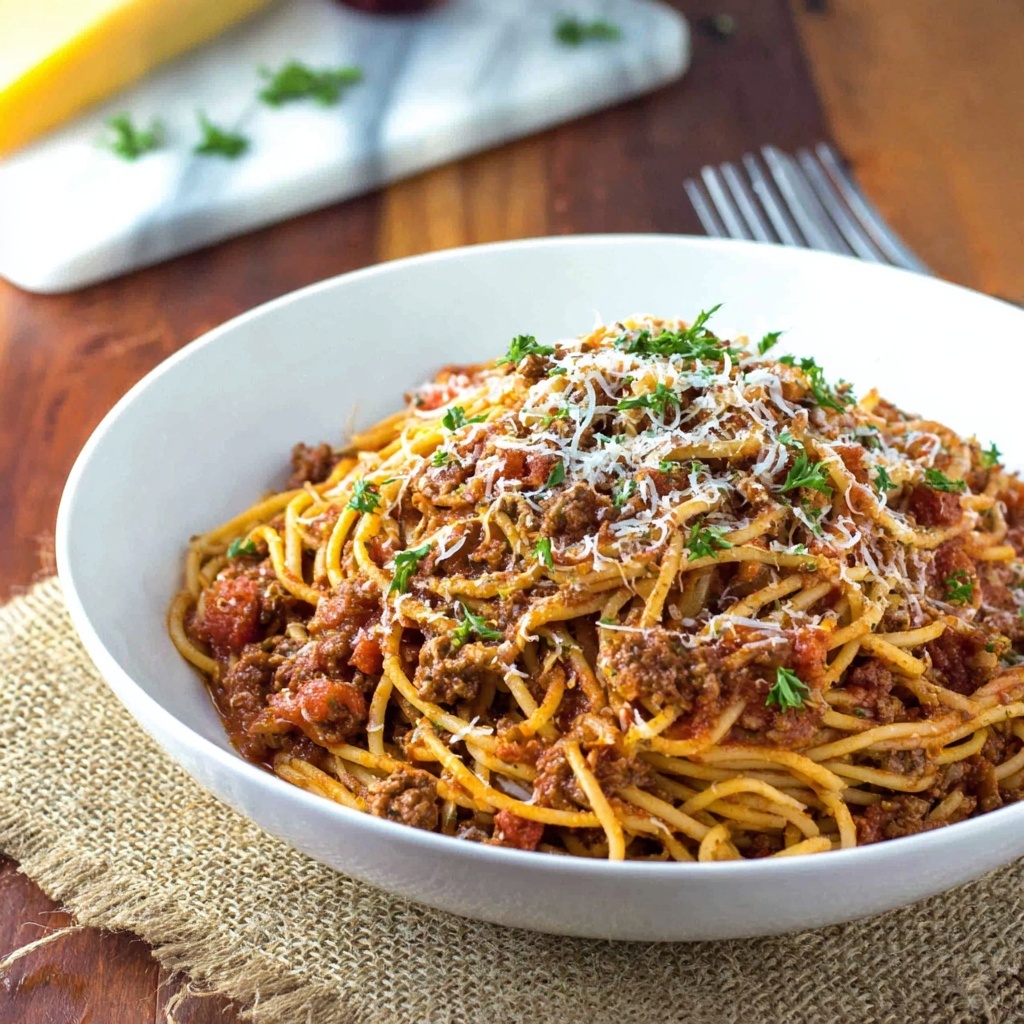
Garnishes
Don’t underestimate the power of toppings! A generous shower of freshly grated parmesan adds a salty creaminess that pairs beautifully with the beef ragu’s deep, tomato-rich flavor. Meanwhile, a handful of chopped parsley brightens the dish, balancing richness with herbal freshness.
Side Dishes
This hearty pasta stands tall on its own, but if you want to elevate your meal, consider classic sides like a crisp Caesar salad or garlic-roasted vegetables. Crusty bread is also fantastic for mopping up every last drop of ragu sauce—because what’s a good pasta without bread to complete the experience?
Creative Ways to Present
For an impressive twist, try plating the Beef Cheek Ragu Pasta Recipe in shallow bowls for that rustic, trattoria-style look. You might also garnish with a drizzle of high-quality extra virgin olive oil or a few flakes of chili for subtle heat. If hosting, serve alongside a glass of robust red wine to complement the sauce’s richness.
Make Ahead and Storage
Storing Leftovers
If you happen to have leftovers (although it’s hard to resist eating this all in one go), store the pasta and sauce separately in airtight containers in the fridge. This prevents the spaghetti from soaking up too much sauce and turning mushy overnight.
Freezing
The ragu sauce freezes exceptionally well. Portion it out into freezer-safe containers or bags for up to 3 months. When you’re ready to enjoy it again, defrost overnight in the fridge—a brilliant way to have a delicious, homemade sauce ready to go in minutes.
Reheating
Reheat the sauce gently on the stovetop over low heat, stirring occasionally, until warmed through. For the pasta, reheating with a splash of water or sauce helps refresh its texture so it doesn’t dry out. Toss everything together just before serving to recapture that freshly made magic.
FAQs
Can I use fresh beef cheeks instead of leftover slow-cooked ones?
Absolutely. Fresh beef cheeks will need to be slow cooked until tender before shredding and adding to the ragu. Using leftover slow-cooked cheeks just saves time, but starting fresh works wonderfully if you have the time to cook them low and slow first.
What type of pasta works best with this ragu?
Traditional long pasta like spaghetti or tagliatelle is ideal, as the sauce clings beautifully to each strand. However, rigatoni or pappardelle also make excellent choices if you prefer wider noodles to scoop up the chunky ragu.
Is this recipe spicy?
Not by default. The Beef Cheek Ragu Pasta Recipe focuses on rich, savory, and slightly sweet flavors. If you enjoy a bit of heat, you can easily add crushed red pepper flakes while sautéing the onions and garlic.
Can I prepare this dish without the red wine sauce?
The red wine sauce is integral in building the depth of flavor for the beef cheeks and the ragu itself. While you can try using beef broth or another rich stock as a substitute, the wine contributes a subtle acidity and richness that’s hard to replicate.
How can I make this recipe more weeknight-friendly?
Using pre-cooked beef cheeks or leftovers is a major time-saver. You can also prepare the ragu sauce ahead and just toss with freshly boiled pasta when ready. This halves the effort on busy evenings while still delivering that soulful, home-cooked flavor.
Final Thoughts
If comfort food had a champion, the Beef Cheek Ragu Pasta Recipe would be it. With its tender beef, luscious sauce, and perfectly cooked pasta, every bite feels like a celebration of slow-cooked goodness and simple ingredients done right. I can’t recommend enough that you give this recipe a try—whether for a cozy family meal or when you want to impress guests with a dish that tastes like it took hours, but comes together so effortlessly.
Print
Beef Cheek Ragu Pasta Recipe
- Prep Time: 5 minutes
- Cook Time: 10 minutes
- Total Time: 15 minutes
- Yield: 4 servings
- Category: Main Course
- Method: Stovetop
- Cuisine: Italian
Description
This Beef Cheek Ragu Pasta is a hearty and comforting Italian-inspired dish that features tender slow-cooked beef cheeks shredded into a rich tomato-based sauce. Paired with al dente spaghetti and garnished with freshly grated Parmesan and parsley, this recipe offers a perfect balance of savory meatiness and vibrant acidity, ideal for a satisfying weeknight dinner.
Ingredients
Pasta
- 350 g / 12 oz dried spaghetti
Beef Ragu
- 2 cups leftover beef from Slow Cooked Beef Cheeks in Red Wine, shredded
- 1 cup sauce of Slow Cooked Beef Cheeks in Red Wine
- 1 onion (brown, white or yellow), diced
- 2 garlic cloves, minced
- 2 tbsp olive oil
- 2 cups crushed tomato (canned)
- 3 tbsp tomato paste
- 1/2 cup water
- 1 to 2 tsp salt (adjust to taste)
- Black pepper, to taste
Garnish
- Freshly grated Parmesan cheese
- Parsley, finely chopped
Instructions
- Cook the pasta: Bring a large pot of salted water to a boil. Add the dried spaghetti and cook for 6 minutes or just before al dente, meaning the pasta should be slightly undercooked and very firm to the touch. This allows the pasta to finish cooking in the sauce later without becoming mushy.
- Sauté aromatics: While the pasta is boiling, heat 2 tablespoons of olive oil in a large pan over medium-high heat. Add the diced onion and minced garlic, sautéing them for about 3 minutes until they become fragrant and translucent.
- Prepare the ragu sauce: Add the shredded beef cheeks, 1 cup of their leftover sauce, 2 cups of canned crushed tomatoes, 3 tablespoons of tomato paste, and 1/2 cup of water to the pan. Stir to combine and bring the mixture to a rapid simmer. Stir occasionally, seasoning with 1 to 2 teaspoons of salt and black pepper to taste. If the sauce is too thick, add a splash of pasta cooking water to loosen it.
- Combine pasta and sauce: Using tongs, transfer the pasta directly from the boiling water into the pan with the ragu sauce. Pour in an additional 1/2 cup of pasta cooking water and gently toss the spaghetti in the sauce for 1 to 2 minutes. This step finishes cooking the pasta to perfect al dente texture and helps the sauce cling to the noodles while thickening slightly.
- Serve: Plate the ragu pasta immediately and garnish with freshly grated Parmesan cheese and finely chopped parsley for brightness and added flavor.
Notes
- Using leftover slow-cooked beef cheeks absorbs the rich flavors into the ragu, but you can also substitute with other slow-cooked beef cuts.
- Adjust salt and pepper gradually to suit your taste preferences.
- Reserve some pasta cooking water to adjust the sauce consistency without losing flavor.
- This dish pairs well with a crisp green salad or garlic bread.
- For a spicier twist, add red chili flakes during sautéing.