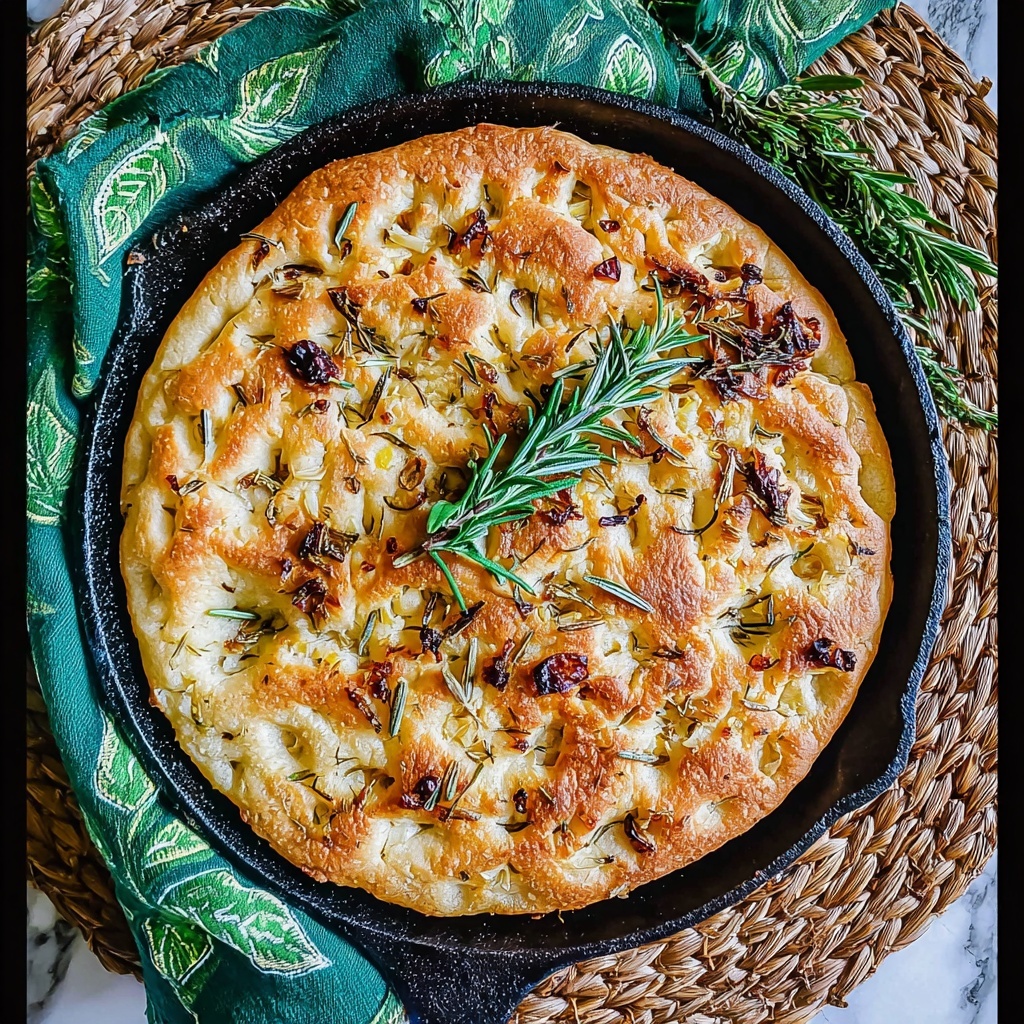
There is something utterly magical about fresh bread made from scratch, especially when it is infused with fragrant herbs and garlic. This Garlic and Rosemary Skillet Bread Recipe is one of my all-time favorites because it is surprisingly simple yet utterly delicious, combining crispy edges with a soft, tender crumb. With just a few pantry staples and fresh rosemary, you’ll soon be pulling golden, aromatic bread from your oven that smells like a cozy kitchen on a Sunday morning. Trust me, this recipe becomes your go-to, the kind of bread that turns any meal into a celebration.
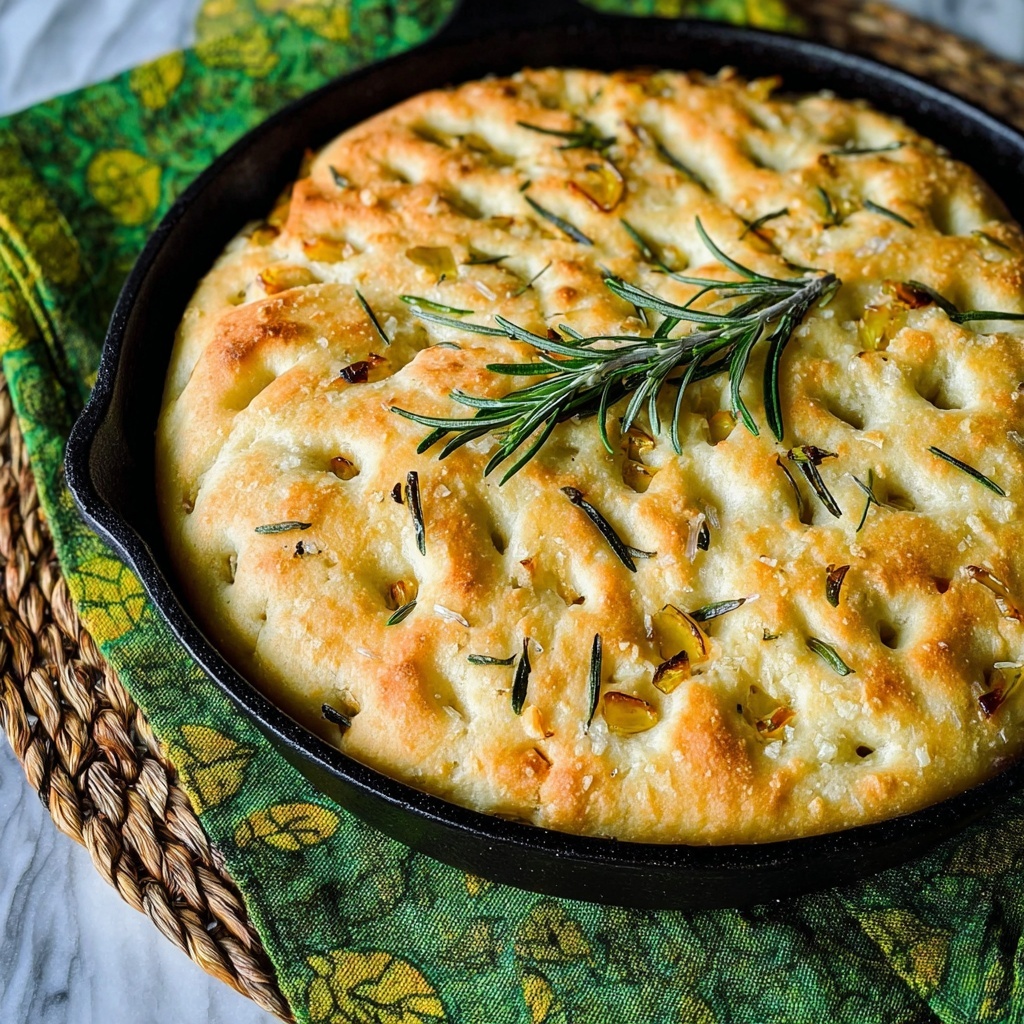
Ingredients You’ll Need
The beauty of this Garlic and Rosemary Skillet Bread Recipe lies in its straightforward ingredients list. Each item plays an essential role, from activating the yeast to developing flavor and creating that perfect golden crust. Let’s break down the essentials you’ll need:
- Warm water: The perfect temperature to wake up the yeast without scorching it, ensuring a lively rise.
- White sugar: Feeds the yeast to get your dough bubbly and ready to rise beautifully.
- Active dry yeast: The magic ingredient that helps your bread grow and develop that airy texture.
- Sea salt (or kosher salt): Brings out flavor and balances the sweetness with a subtle savory note.
- Olive oil: Adds moisture and richness in both the dough and for brushing, giving a tender crumb and crisp crust.
- All-purpose (or bread) flour: The backbone of your dough, providing structure and chew.
- Garlic: Thinly sliced to release a delicate, aromatic flavor that permeates the bread.
- Fresh rosemary (or dried): Imparts a piney, herbaceous lift that pairs perfectly with garlic.
How to Make Garlic and Rosemary Skillet Bread Recipe
Step 1: Activate Your Yeast
Start with warm water that feels like a cozy bath to your fingers—not too hot or cold. Stir in the white sugar and yeast, give it a nice mix, and then patiently wait for about 5 minutes. This step is exciting because seeing those bubbles form confirms your yeast is alive and ready to work its magic.
Step 2: Confirm the Yeast is Active
If your yeast mixture is bubbly and foamy at this point, you’re on the right track! If it looks flat, don’t fret—just start over with fresh yeast. This small wait upfront means your bread will rise beautifully, giving you a soft, airy texture every time.
Step 3: Mix the Dough
To the lively bubbling yeast mixture, add your salt, olive oil, and flour. Begin stirring until a soft dough starts to come together. Whether you prefer using a stand mixer with a dough hook or kneading by hand on a flour-dusted surface, knead the dough for about 8-10 minutes. It might be slightly sticky at first, but that’s exactly what you want—it will develop into the ideal balance of softness and structure.
Step 4: First Rise
Grease a large bowl and place your dough ball inside, rolling it around to coat with oil. Cover it with plastic wrap and let it rise until it nearly doubles in size, about 45 minutes. The dough will feel soft and springy when it’s ready for the next stage, promising a beautifully light loaf.
Step 5: Prepare the Skillet
Generously oil a 10-inch cast iron skillet with olive oil—this not only prevents sticking but helps develop a golden, crisp crust on the bottom. Punch down your dough to release some of the air, then press it gently but firmly into the skillet, shaping it to fit just right.
Step 6: Add Toppings
Use a sharp knife to score the top of the dough in a crisscross pattern—this helps with expansion and creates a rustic look. Brush the surface with olive oil, then sprinkle thinly sliced garlic, chopped rosemary, and a pinch of salt evenly over the top. These fragrant toppings will roast beautifully in the oven, permeating every bite.
Step 7: Second Rise
Cover the skillet loosely with plastic wrap again and let the dough rise another 20 minutes. This final rest ensures your bread stays light and airy inside while forming a perfect crust outside.
Step 8: Preheat the Oven
Get your oven ready by preheating it to 400 degrees Fahrenheit. A hot oven is key to achieving that golden, crispy exterior while keeping the interior tender and soft.
Step 9: Bake the Bread
Slide your skillet into the oven and bake the bread for 20 to 25 minutes. Keep an eye on the color—the top should be a lovely light golden brown, signaling perfection just around the corner.
Step 10: Remove and Cool
Once baked, carefully remove the skillet from the oven. Take the bread out immediately and transfer it to a wire rack to cool. Leaving it in the pan will cause the crust to steam and lose its crispness, so this step is crucial for maintaining that delightful texture.
Step 11: Finish and Serve
Drizzle a little more olive oil over the warm bread, slice it into wedges, and serve it right away. The combination of crispy crust, tender crumb, and herby garlic aroma makes it difficult to resist going back for seconds.
How to Serve Garlic and Rosemary Skillet Bread Recipe
Garnishes
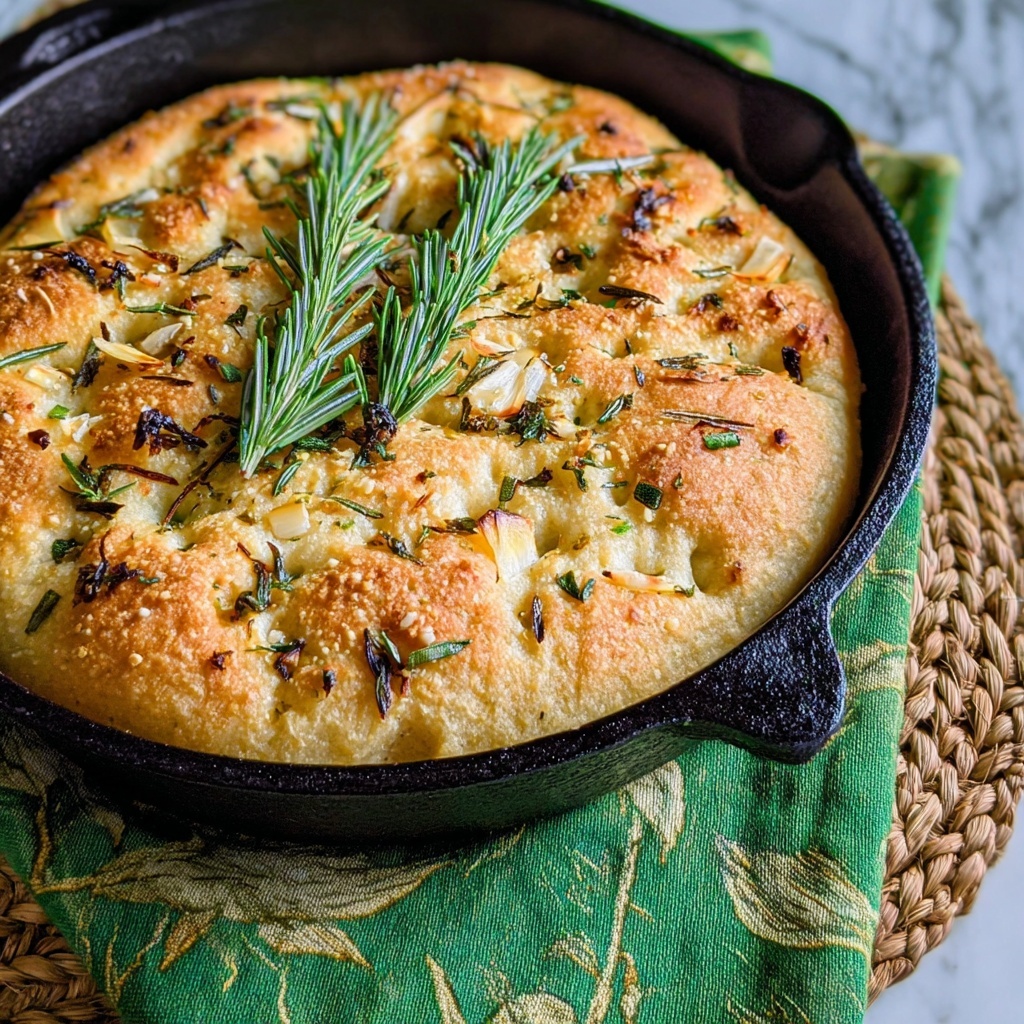
To elevate your Garlic and Rosemary Skillet Bread Recipe, consider an extra sprinkle of flaky sea salt just before serving or a drizzle of high-quality extra virgin olive oil. Fresh rosemary sprigs or a light brush of melted butter right after baking can also add a beautiful shine and enhance aroma.
Side Dishes
This bread is incredibly versatile. Pair it with a bowl of warm soup, a vibrant salad, or alongside your favorite Italian dishes like pasta or antipasto. It also shines when served with creamy cheeses or a zesty tapenade, making it a star at any gathering.
Creative Ways to Present
For a fun twist, serve your skillet bread with a flavored olive oil dipping trio or even a trio of herbed butters. You could also cut the bread into cubes and create an elegant bruschetta bar with various toppings like tomatoes, avocado, or roasted veggies—perfect for a casual party or family dinner.
Make Ahead and Storage
Storing Leftovers
If you happen to have leftovers (which is rare!), wrap the bread tightly in plastic wrap or store in an airtight container at room temperature. It’s best enjoyed within two days to maintain freshness and texture.
Freezing
You can freeze this bread by wrapping it well in plastic wrap and then in foil or a freezer bag. When you want to enjoy it again, thaw at room temperature. Freezing is a great way to have this delicious bread ready without any waste.
Reheating
To bring your bread back to life, preheat your oven to 350 degrees Fahrenheit and warm the bread for about 10 minutes. This restores the crispy crust and soft interior just as if it were freshly baked.
FAQs
Can I use dried rosemary instead of fresh?
Absolutely! If fresh rosemary isn’t available, use about one teaspoon of dried rosemary. It will still infuse a lovely herbal aroma and flavor into the bread.
What if my dough is too sticky to handle?
A slightly sticky dough is normal, but if it’s too wet to work with, add flour a tablespoon at a time while kneading until it’s soft yet manageable. Avoid adding too much to keep the bread tender.
Do I have to use a cast iron skillet?
A cast iron skillet is ideal for this recipe because it holds and distributes heat well, creating a perfect crust. However, you can use any oven-safe skillet or pan with similar dimensions, just make sure it’s well oiled.
Can I make this bread without a stand mixer?
Definitely! Kneading by hand on a lightly floured surface works just as well and gives you a great feel for the dough texture as it develops.
How long does the bread stay fresh?
Freshly baked bread tastes best the same day but will keep well for up to two days at room temperature when stored properly. After that, reheating helps revitalize it.
Final Thoughts
I can’t recommend this Garlic and Rosemary Skillet Bread Recipe enough. It’s one of those recipes that turns everyday ingredients into something truly special. Whether you’re baking for family, friends, or savoring it quietly on your own, this bread always brings warmth and joy to the table. Give it a try—you’ll soon find yourself reaching for this skillet bread anytime you want a little delicious comfort.
Print
Garlic and Rosemary Skillet Bread Recipe
- Prep Time: 20 minutes
- Cook Time: 20-25 minutes
- Total Time: 1 hour 5 minutes
- Yield: 6 servings
- Category: Bread
- Method: Baking
- Cuisine: Italian-inspired
Description
This Garlic and Rosemary Skillet Bread recipe is a flavorful, rustic bread with a crispy crust and a soft, tender crumb. Infused with fresh garlic and fragrant rosemary, this loaf is baked in a cast iron skillet to develop a golden crust, making it perfect for serving alongside soups, salads, or as a savory snack.
Ingredients
For the Dough
- 1 cup water (warm – not hot! not cold! Like a nice warm bath)
- 1 tablespoon white sugar
- 1 tablespoon active dry yeast (or 1 package)
- 3/4 teaspoon sea salt (or kosher salt)
- 1/4 cup olive oil (for the dough)
- 2 & 1/4 cups all-purpose or bread flour, plus more as needed
For the Skillet and Topping
- 1 tablespoon olive oil (for bottom of skillet)
- 1 tablespoon olive oil (for top of bread)
- 2 cloves garlic (thinly sliced)
- 2 sprigs rosemary (fresh, chopped or 1 teaspoon dried)
- 1/2 teaspoon sea salt (or kosher salt)
Instructions
- Activate Yeast: In a large bowl or stand mixer, combine warm water, sugar, and yeast. Stir gently and let sit for 5 minutes until the mixture becomes bubbly and foamy, indicating the yeast is active.
- Mix Dough: Add salt, olive oil, and flour to the yeast mixture. Stir to form a soft dough. Using a stand mixer with a dough hook or by hand, knead the dough for 8-10 minutes, adding extra flour as needed, until it is workable but still slightly sticky.
- First Rise: Grease a large bowl with olive oil. Shape the dough into a ball and place it in the bowl, turning to coat with oil. Cover with plastic wrap and let it rise for 45 minutes until doubled in size.
- Prepare Skillet: Coat a 10-inch cast iron skillet with olive oil. Punch down the risen dough and press it evenly into the skillet bottom. Score the top of the dough in a crisscross pattern with a sharp knife.
- Add Toppings & Second Rise: Brush the bread top with olive oil, then sprinkle evenly with sliced garlic, chopped rosemary, and salt. Cover loosely with plastic wrap and let it rise for another 20 minutes.
- Preheat Oven: Heat your oven to 400°F (204°C) while the bread completes its second rise.
- Bake: Place the skillet in the oven and bake for 20-25 minutes, until the top is lightly golden brown and crusty.
- Cool & Serve: Remove the bread from the oven and immediately transfer it from the skillet to a wire rack to cool, preventing the crust from becoming soggy. Drizzle with additional olive oil, slice into wedges, and serve warm.
Notes
- Warm water temperature is key for yeast activation; it should feel like a warm bath to the touch, about 100-110°F (37-43°C).
- If your yeast does not foam after 5 minutes, discard the mixture and start over with new yeast.
- Kneading can be done by hand or with a stand mixer fitted with a dough hook.
- Do not let the bread cool in the skillet to keep the crust crisp.
- Use a 10-inch cast iron skillet for best crust formation.
- You can substitute dried rosemary if fresh is unavailable.
- This bread is best enjoyed fresh but can be reheated to revive its crust.