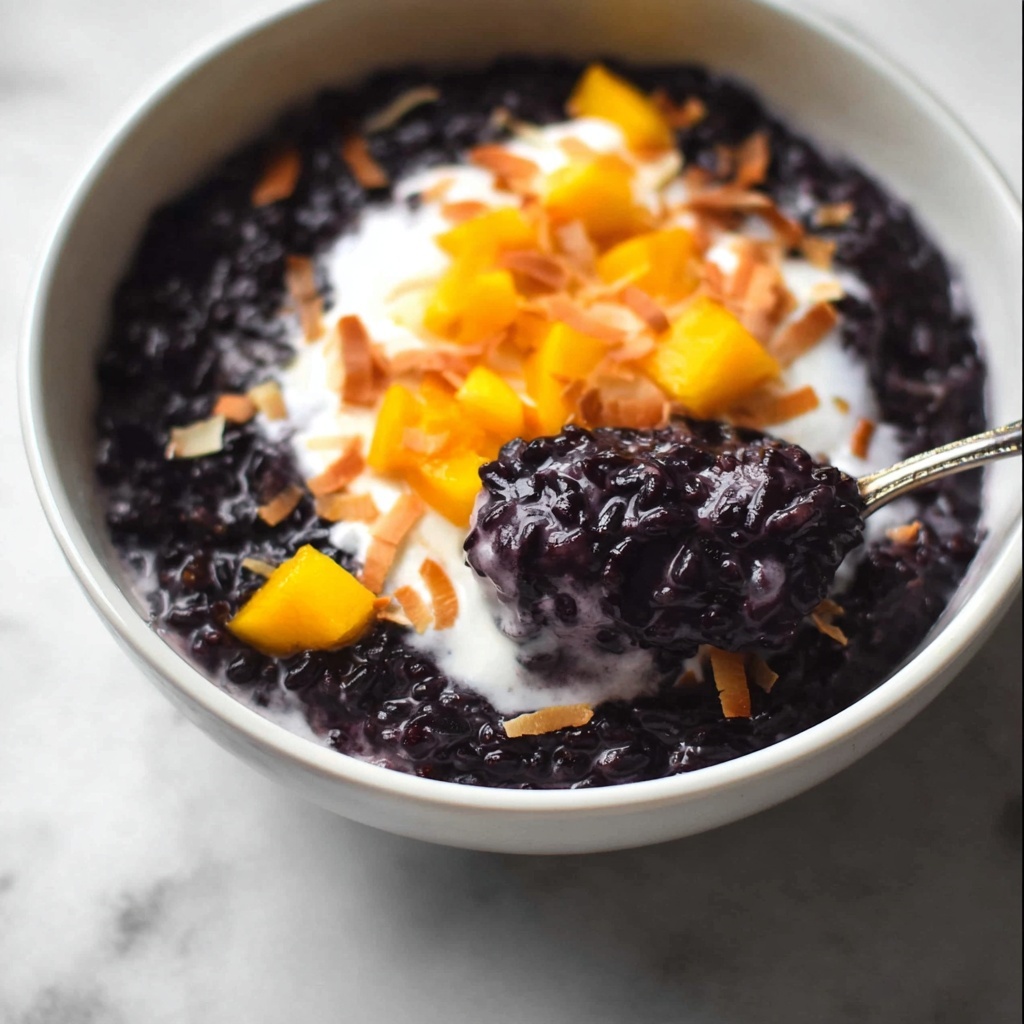
If you are searching for a comforting, sweet treat that’s both exotic and soul-satisfying, look no further than this Thai Black Sticky Rice Pudding Recipe. This warm, creamy dessert combines the nutty aroma of black glutinous rice with the richness of coconut cream and the unique fragrance of pandan leaves. Each spoonful is a luscious blend of flavors and textures, delivering a subtly sweet pudding that feels deeply rooted in Thai tradition yet perfect for any modern kitchen craving a delightful twist.
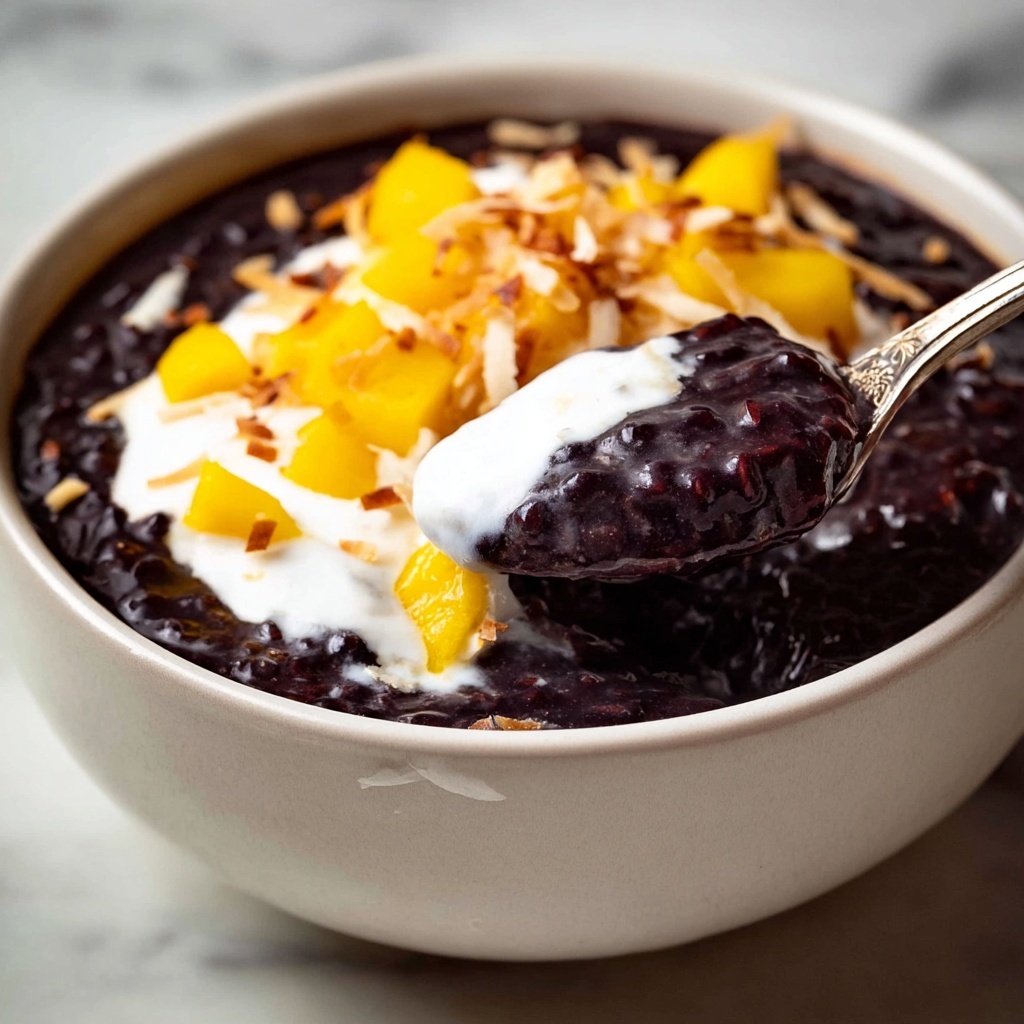
Ingredients You’ll Need
The beauty of this Thai Black Sticky Rice Pudding Recipe lies in the simplicity and authenticity of its ingredients. Each component plays an essential role in developing its signature texture, flavor, and aroma, ensuring an unforgettable experience in every bite.
- Black glutinous rice: The star ingredient offering a distinctive color, chewy texture, and natural sweetness.
- White glutinous rice: Adds softness and balance to the pudding texture.
- Water: The base for cooking the rice to the perfect tenderness.
- Pandan leaves: Imparts an aromatic, floral fragrance typical in Southeast Asian desserts.
- Palm sugar: A nuanced sweetener with caramel notes that enhances richness.
- Salt: Balances the sweetness and elevates the flavors overall.
- Coconut cream: Provides lush creaminess and a tropical essence that makes this dish irresistible.
- Toasted shaved coconut (optional): Adds a delightful crunch and toasted aroma as a garnish.
- Mango cubes or crushed peanuts (optional): For a fresh or nutty topping to complement the pudding.
How to Make Thai Black Sticky Rice Pudding Recipe
Step 1: Soak the Rice
The first and crucial step is soaking both the black and white glutinous rice in plenty of water for at least 4 hours, or up to 12 hours if you have the time. This softens the grains, ensuring they cook evenly, and helps the pudding achieve that perfect chewy yet tender bite that defines a great sticky rice pudding.
Step 2: Prepare to Cook
After soaking, strain the rice thoroughly and place it in a pot or a large saucepan, ready for the simmering process. This simple step sets the stage for the rich flavors to develop slowly and beautifully.
Step 3: Add the Pandan Leaves
Next, add the pandan leaves folded and knotted into the pot. These fragrant leaves infuse an unmistakable floral aroma that makes this recipe authentically Thai and utterly captivating.
Step 4: Simmer Gently
Pour in 4 cups of cold water and bring the mixture to a gentle boil. Once boiling, lower the heat to a very gentle simmer. It’s important to maintain small, slow bubbles. Simmer for about 30 minutes without a lid. Stir frequently toward the last 15 minutes and almost nonstop as you approach the end. Stirring prevents the rice from sticking and burning, while helping the starches release to create a creamy sauce.
Step 5: Achieve the Right Consistency
When the rice is fully cooked and tender, and the liquid has thickened into a creamy pudding, you know you’ve reached perfection. The rice should be soft but not mushy, with a luscious, spoonable consistency that slowly oozes but doesn’t run.
Step 6: Sweeten the Pudding
Stir in the grated palm sugar and salt until fully dissolved, about 20 seconds. This delicate balance between sweetness and saltiness is what makes the Thai Black Sticky Rice Pudding Recipe incredibly addictive and harmonious in flavors.
Step 7: Serve with Care
Ladle the creamy pudding into serving bowls. If the pudding feels too thick, simply add a small splash of water and stir to loosen it slightly. The ideal texture is a gooey, tender pudding that holds shape yet slowly gives way on the spoon.
Step 8: Add Toppings
Mix the coconut cream and salt together, then generously drizzle it over the warm pudding. Sprinkle toasted shaved coconut for a lovely crunch and aroma, and top with fresh mango cubes or crushed peanuts if you are feeling adventurous. Serve immediately for the best experience.
How to Serve Thai Black Sticky Rice Pudding Recipe
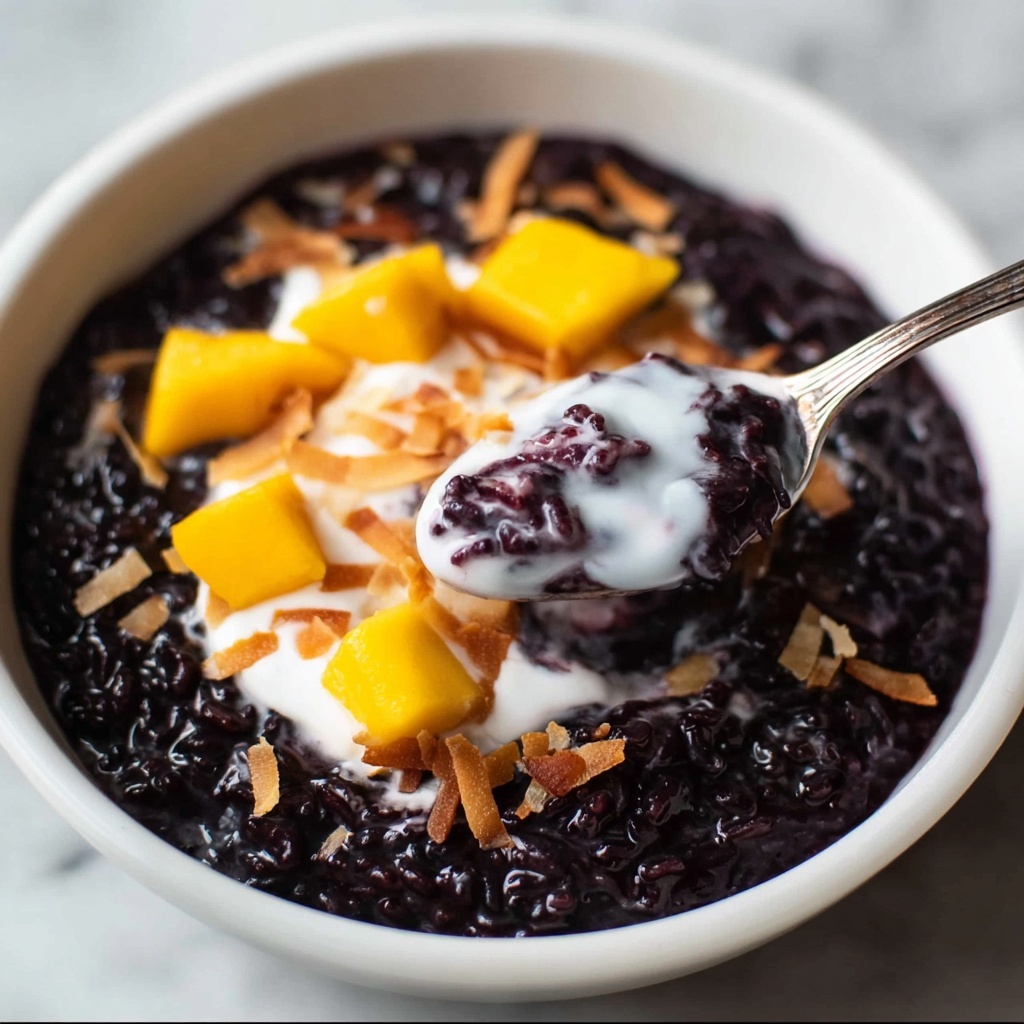
Garnishes
Simple garnishes like toasted coconut, fresh mango cubes, or crunchy peanuts elevate the pudding’s texture and tastes. These toppings add brightness, contrast, and an extra dimension, making every bite more exciting and satisfying.
Side Dishes
Pair this pudding with light Thai dishes such as green papaya salad or a mild chicken satay to balance out the sweet richness. The contrast between savory and sweet creates a well-rounded dining experience.
Creative Ways to Present
For a fun twist, serve this pudding chilled in small glass jars or coconut shells for an authentic feel. You can also layer it with pieces of fresh fruit and coconut cream for a stunning parfait-style dessert that’s sure to wow guests.
Make Ahead and Storage
Storing Leftovers
This pudding keeps well in an airtight container in the refrigerator for up to 3 days. The texture may thicken, but a quick stir and a splash of water or coconut cream will bring it back to its silky self.
Freezing
While you can freeze leftovers, keep in mind the texture might change slightly. Freeze in small portions and thaw overnight in the refrigerator. Stir well before reheating to restore creaminess.
Reheating
Reheat gently in a saucepan over low heat or in the microwave in short bursts, stirring often. Add a little water or coconut cream during reheating to loosen the pudding and maintain its luscious consistency.
FAQs
Can I substitute the black glutinous rice?
For the signature chewy texture and color, black glutinous rice is best. Substituting may alter the taste and consistency, but white sticky rice alone could be used in a pinch with a lighter flavor and color.
Is pandan leaf essential?
Pandan leaves add a unique fragrance traditional to Thai desserts. If unavailable, vanilla or a small amount of lemon zest can provide some aromatic lift, but the flavor won’t be quite the same.
What if I don’t have palm sugar?
Brown sugar is a good substitute, though palm sugar adds a deeper caramel note. You can mix brown sugar with a little molasses to mimic this flavor if needed.
Can this dessert be made vegan?
Yes! This recipe is naturally vegan as it uses coconut cream instead of dairy. Just ensure any optional toppings like crushed peanuts or fruits fit your dietary preferences.
How do I know when the pudding is cooked?
The rice should be tender but retain some chew, and the liquid thickened to a creamy, slightly sticky consistency that drapes over a spoon but is not watery or hard.
Final Thoughts
This Thai Black Sticky Rice Pudding Recipe is a true treasure to keep in your culinary repertoire. Whether you’re looking to impress guests or indulge yourself after a long day, it brings comfort, sweetness, and a hint of Thai tradition into every spoonful. Give it a try—you’ll find it hard not to fall in love with this comforting, delicious dessert.
Print
Thai Black Sticky Rice Pudding Recipe
- Prep Time: 10 minutes
- Cook Time: 30 minutes
- Total Time: 40 minutes
- Yield: 5.5 to 6 servings
- Category: Dessert
- Method: Stovetop
- Cuisine: Thai
- Diet: Gluten Free
Description
This traditional Thai Black Sticky Rice Pudding is a comforting and creamy dessert featuring the unique flavor of black glutinous rice simmered with pandan leaves and sweetened with palm sugar. Finished with rich coconut cream and optional toasted coconut or fresh mango toppings, this pudding offers a perfect balance of sweetness, texture, and exotic fragrance, ideal for a satisfying treat.
Ingredients
Rice and Liquid
- 1 cup black glutinous rice (aka black sticky rice)
- 4 tbsp white glutinous rice (white sticky rice)
- 4 cups water
- 2 pandan leaves, folded and knotted
Sweeteners and Seasonings
- 1 cup palm sugar (loosely packed), grated with box grater (or brown sugar)
- 1/2 tsp salt
- 1/8 tsp salt
Cream and Toppings
- 1/2 cup coconut cream (very highly recommended)
- 1/2 cup shaved coconut, toasted (optional)
- Mango cubes or crushed peanuts, for topping (optional)
Instructions
- Soak Rice: Place both black and white glutinous rice in a bowl and cover with water about 5cm (2 inches) above the rice. Soak for 4 hours, or up to 12 hours for best texture.
- Strain Rice: Drain the soaked rice thoroughly and transfer it to a small pot or large saucepan for cooking.
- Add Pandan Leaves: Fold and knot pandan leaves and add them to the pot with the rice to infuse fragrance.
- Simmer the Rice: Pour 4 cups of cold water into the pot. Bring to a boil over medium-high heat. Once boiling, reduce the heat to low to maintain a gentle simmer with small, slow bubbles. Simmer uncovered for 30 minutes, stirring frequently during the last 15 minutes, and almost constantly near the end to prevent sticking or burning on the bottom.
- Check Consistency: Rice should be fully cooked and soft, with the water mostly reduced and the mixture thickened to a creamy texture due to the starch released from the rice. It should not be watery.
- Add Sugar and Salt: Stir in grated palm sugar and 1/2 tsp salt until the sugar fully dissolves, about 20 seconds.
- Serve the Pudding: Ladle the pudding into bowls. It should flow slowly when spooned—neither too runny nor too thick. If too thick, add a small amount of water and stir to adjust consistency.
- Add Toppings: Mix the coconut cream with 1/8 tsp salt and drizzle it over the pudding. Sprinkle toasted shaved coconut and add mango cubes or crushed peanuts if desired. Serve immediately for best flavor and texture.
Notes
- Soaking the rice helps achieve a soft, creamy texture and reduces cooking time.
- Pandan leaves add a subtle floral aroma essential to authentic Thai sticky rice pudding.
- Palm sugar provides a richer caramel-like sweetness compared to white sugar. Brown sugar can be used as a substitute.
- To toast coconut, spread shaved coconut in a dry pan over medium heat until golden and fragrant.
- Adjust the thickness of the pudding by adding a little water if it becomes too firm after cooling.
- For a vegan version, ensure the coconut cream is plant-based and do not use any animal-derived toppings.