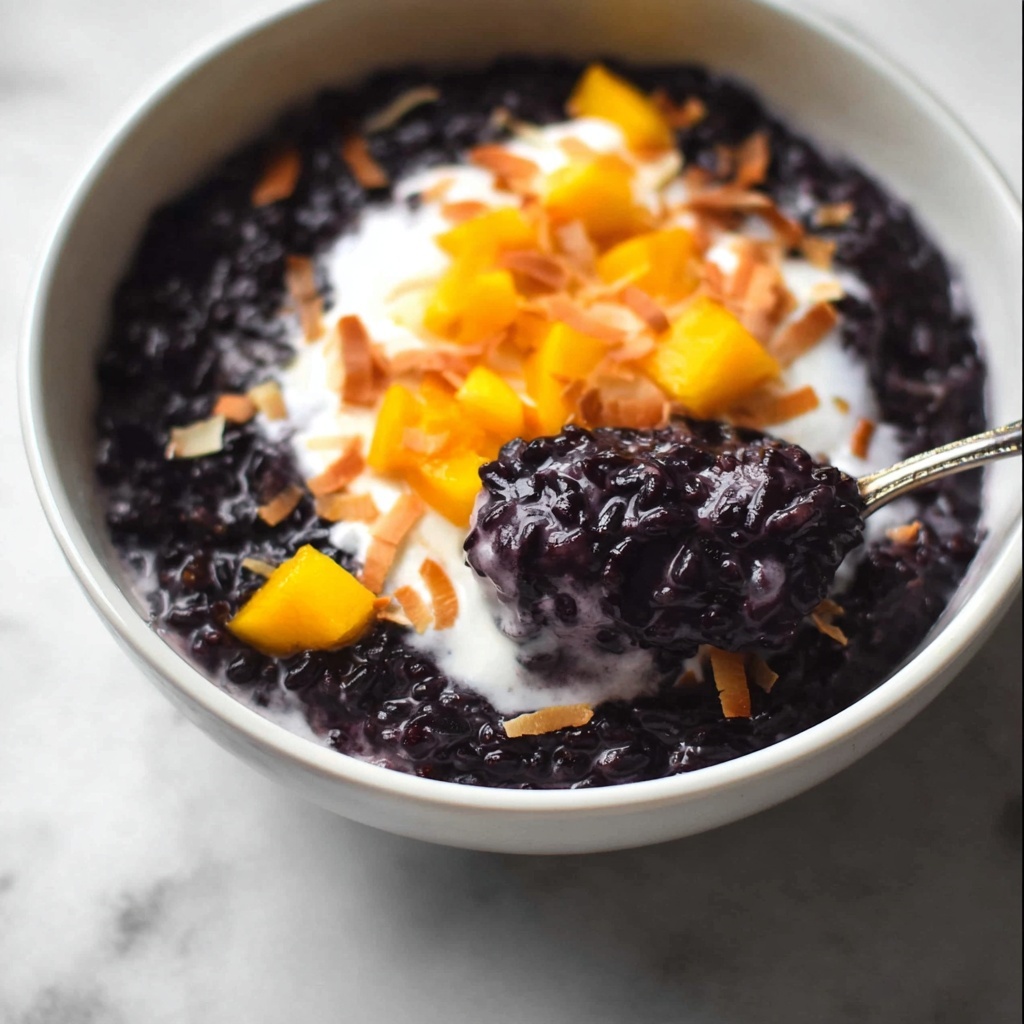
If you have a penchant for desserts that wrap you in cozy warmth and exotic flavors, then this Thai Black Sticky Rice Pudding Recipe will quickly become a trusted favorite in your kitchen. Imagine the lush, nutty aroma of black sticky rice perfectly cooked to a creamy texture and sweetened with fragrant palm sugar, all lifted by the tropical richness of coconut cream. This pudding is not just a treat; it’s a beautiful tapestry of taste and tradition that’s irresistibly sticky, deeply comforting, and incredibly satisfying.
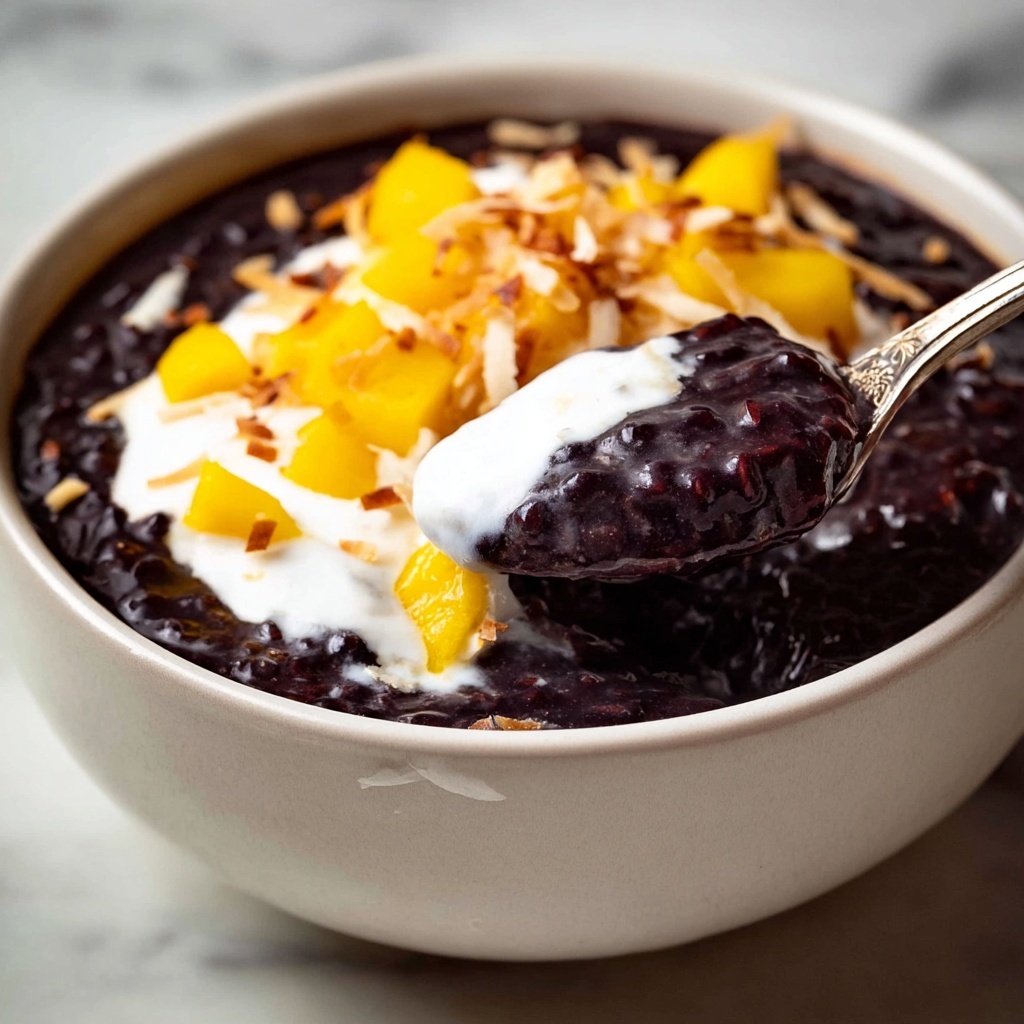
Ingredients You’ll Need
Preparing Thai Black Sticky Rice Pudding is wonderfully straightforward, relying on just a handful of simple yet essential ingredients. Each one plays its own unique role in creating the pudding’s perfect balance of flavor, texture, and color that will delight your taste buds.
- Black glutinous rice: This is the star ingredient, providing the signature deep purple-black color and chewy texture essential to this pudding.
- White glutinous rice: Adds softness that balances the chewy black rice for a more tender bite.
- Water: The base for cooking the rice slowly until it transforms into pudding.
- Pandan leaves: Infuse the pudding with an aromatic, grassy note that’s quintessentially Thai.
- Palm sugar: Its rich, caramel-like sweetness perfectly complements the earthy rice.
- Salt: Enhances and balances the sweetness to keep the flavors vibrant.
- Coconut cream: Adds luscious creaminess and a silky mouthfeel, elevating the dish into a tropical indulgence.
- Toasted shaved coconut (optional): Provides a lovely crunch and nutty flavor for added texture contrast.
- Mango or crushed peanuts (optional): Great for topping, they bring fresh sweetness or a satisfyingly savory crunch.
How to Make Thai Black Sticky Rice Pudding Recipe
Step 1: Soak the Rice
Begin by soaking the black and white glutinous rice together in a bowl of water, ensuring the water covers the rice by about two inches. This step softens the grains and shortens the cooking time, making sure the pudding cooks evenly and achieves the perfect creamy texture.
Step 2: Prepare to Cook
After soaking for several hours (four to twelve is ideal), drain the rice and transfer it to a pot. Adding the knotted pandan leaves at this stage infuses the rice with delicate, fragrant notes as it cooks, which is a hallmark of traditional Thai desserts.
Step 3: Simmer the Rice
Add four cups of fresh cold water, and bring the pot to a boil. Then reduce the heat to a gentle simmer. Stir frequently to avoid the rice sticking to the bottom, especially in the last 15 minutes when the mixture thickens into pudding. This slow simmering transforms the sticky rice into a luscious, creamy base that’s not too wet or dry.
Step 4: Perfect the Texture and Sweeten
Once the rice is tender and the water has thickened into a creamy sauce thanks to the rice’s natural starch, stir in your grated palm sugar and salt. Within seconds, the sweet, slightly smoky flavor of the palm sugar will melt fully into the pudding, creating deep layers of flavor.
Step 5: Serve with Coconut Cream and Toppings
Serve the pudding warm or at room temperature. Drizzle the salted coconut cream over the top to add a rich, velvety contrast. Garnish with toasted coconut for a pleasantly crunchy surprise, or fresh mango cubes or crushed peanuts to bring bright or nutty accents. The final dish should feel like a warm hug with a tropical twist every spoonful.
How to Serve Thai Black Sticky Rice Pudding Recipe
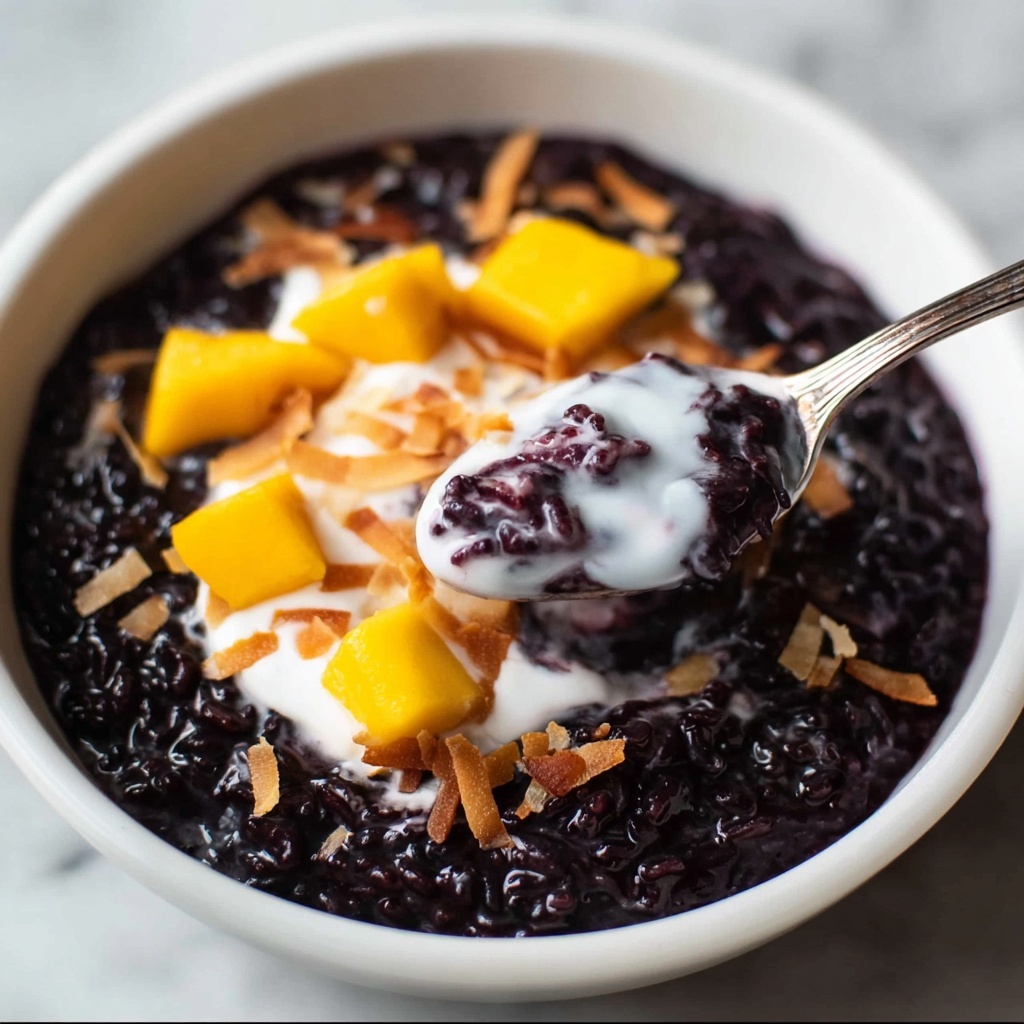
Garnishes
The most classic garnish is coconut cream mixed with a hint of salt, which adds creaminess and balances sweetness perfectly. Toasted shredded coconut adds a crunch and nutty undertone, while juicy mango cubes bring a sunny, fresh contrast that lightens each bite. Crushed peanuts are another lovely option for those who want a bit of texture and a savory edge.
Side Dishes
This pudding shines as a standalone dessert, but it also plays well alongside tropical fruit salads or lightly spiced Thai tea. Serving it with a refreshing mango salad or a cool lemongrass-infused iced tea can make for an unforgettable Thai-inspired meal experience.
Creative Ways to Present
For a fun twist, serve the pudding in small rustic bowls or hollowed-out coconut shells to elevate the tropical vibe. You can also layer the pudding with fresh fruit in clear glasses to showcase its beautiful dark tones contrasting with vibrant mango or bright coconut cream. Mini portions topped with edible flowers offer a stunning, restaurant-worthy presentation.
Make Ahead and Storage
Storing Leftovers
Leftover Thai Black Sticky Rice Pudding Recipe keeps well in the refrigerator for up to three days. Store it in an airtight container to preserve its moisture and aroma. Before serving, give it a gentle stir and add a little water or coconut cream if it seems too thick.
Freezing
Freezing is possible but not ideal for texture since the rice can toughen when thawed. If you do freeze leftovers, portion the pudding into airtight containers and consume within one month. Thaw overnight in the refrigerator for best results.
Reheating
To reheat, warm the pudding gently on the stove over low heat or in short bursts in the microwave. Stir frequently and add a splash of water or coconut cream to restore its creamy consistency. Avoid overheating to prevent it becoming dry or sticky.
FAQs
Can I use regular rice instead of black glutinous rice?
Regular rice won’t provide the same sticky texture or the unique coloration and flavor that black glutinous rice offers. For an authentic Thai Black Sticky Rice Pudding Recipe experience, stick with glutinous varieties.
What is the role of pandan leaves in this recipe?
Pandan leaves add a subtle floral and grassy aroma that elevates the pudding’s flavor, making it truly authentic and aromatic. You can skip them, but the pudding will miss that classic Thai fragrance.
Is palm sugar necessary, or can I substitute with brown sugar?
Palm sugar contributes a smoky, caramel depth unlike brown sugar, but brown sugar is a fine substitute if palm sugar is hard to find. It won’t be exactly the same, but still delicious.
Can this pudding be made vegan?
Yes! Since the recipe already uses coconut cream, which is plant-based, and palm sugar, it suits most vegan diets naturally as long as you ensure your sugar is vegan-certified.
How thick should the pudding be when it’s done?
The pudding should be creamy, thick enough to ooze slowly when spooned, but not so thick it clumps or too runny. Think of a soft porridge consistency that holds together gently on your spoon.
Final Thoughts
There is something truly magical about cooking and sharing the Thai Black Sticky Rice Pudding Recipe — it brings together simple ingredients, transformative techniques, and deep cultural authenticity in every spoonful. Whether you’re crafting it as a weeknight treat or a special dessert for guests, it promises a warm, comforting, and memorable experience. So go ahead, try this recipe soon, and let this velvety pudding bring a little bit of Thailand’s sweet heart to your table.
Print
Thai Black Sticky Rice Pudding Recipe
- Prep Time: 10 minutes
- Cook Time: 30 minutes
- Total Time: 40 minutes (plus 4-12 hours soaking time)
- Yield: 5.5 – 6 servings
- Category: Dessert
- Method: Stovetop
- Cuisine: Thai
- Diet: Vegetarian
Description
This authentic Thai Black Sticky Rice Pudding is a creamy, comforting dessert made with black glutinous rice and pandan leaves, sweetened with palm sugar, and enriched with coconut cream. The dish offers a subtly sweet and nutty flavor, perfect for a delightful ending to any meal. The pudding is tender and creamy with a luscious texture, topped with toasted coconut and fresh mango or crunchy peanuts for added contrast.
Ingredients
Rice Base
- 1 cup black glutinous rice (aka black sticky rice)
- 4 tbsp white glutinous rice (white sticky rice)
- 4 cups water
- 2 pandan leaves, folded and knotted
Sweetener and Seasoning
- 1 cup (loosely packed) palm sugar or brown sugar, grated with box grater
- 1/2 tsp salt
Toppings and Garnish
- 1/2 cup coconut cream (very highly recommended)
- 1/8 tsp salt
- 1/2 cup shaved coconut, toasted (optional)
- Mango cubes or crushed peanuts, for topping (optional)
Instructions
- Soak Rice: Place both the black and white glutinous rice in a bowl and cover with water about 2 inches (5cm) above the rice. Let soak for 4 hours, up to 12 hours, to soften the grains.
- Drain Rice: Strain the soaked rice thoroughly and transfer it to a small pot or a large saucepan.
- Add Pandan Leaves: Add the knotted pandan leaves into the pot with the rice to infuse aroma during cooking.
- Simmer Rice: Pour in 4 cups of cold water and bring the mixture to a boil over medium heat. Once boiling, reduce the heat to low to maintain a gentle simmer with small, slow bubbles. Simmer uncovered for 30 minutes, stirring frequently in the last 15 minutes and almost constantly near the end to prevent the rice from sticking and burning at the bottom.
- Check Consistency: The rice should become fully tender and the liquid should have thickened into a creamy sauce from the rice starch, ensuring the pudding is neither runny nor too thick.
- Add Sugar and Salt: Stir in the grated palm sugar and 1/2 teaspoon salt, mixing until fully dissolved, about 20 seconds.
- Serve: Ladle the warm pudding into bowls. If the pudding is too thick, add a little water and stir to loosen it to a slow oozing consistency.
- Add Toppings: Mix the coconut cream with 1/8 teaspoon salt and drizzle it over each bowl of pudding. Sprinkle toasted shaved coconut and finish with optional mango cubes or crushed peanuts. Serve immediately for best flavor and texture.
Notes
- Black glutinous rice offers a distinctive nutty flavor and chewy texture essential for this pudding.
- Pandan leaves impart a subtle, fragrant aroma to the pudding; do not skip if available.
- Palm sugar provides a delicate caramel sweetness that complements the rice perfectly; brown sugar can be substituted but slightly alters flavor.
- Toasted shaved coconut adds crunch and an extra layer of flavor but is optional.
- Serving with fresh mango or crushed peanuts creates delightful flavor and texture contrasts.
- If the pudding thickens too much upon standing, gently stir in a bit of warm water before serving.